
It’s time to put our heads together to build resilience for our bees
Beekeeping challenges aren’t just complex. They’re collective.
Last year, U.S. beekeepers lost over half their bees. If there's one thing that that tells us, it's that something needs to change. But if we want to make real change happen? We’re going to have to tend BOTH to the bees in our boxes, and to the systems we’re in. Here’s why:
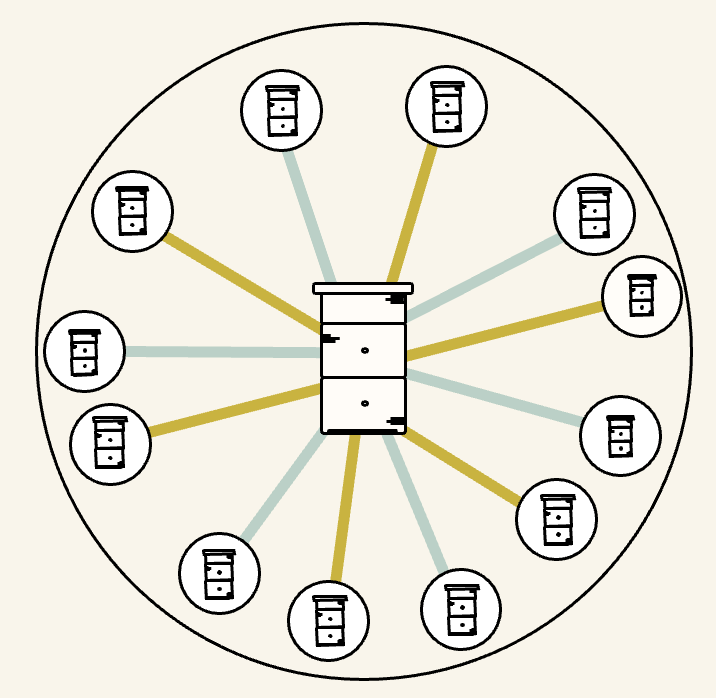
Honey bees are a true free-range species. They forage out on the landscape. They mate in open air. Because our bees interact with the colonies that surround them, the management that one colony receives, the pathogens it contracts, and the traits it passes on can impact outcomes for other colonies, even across great distances.
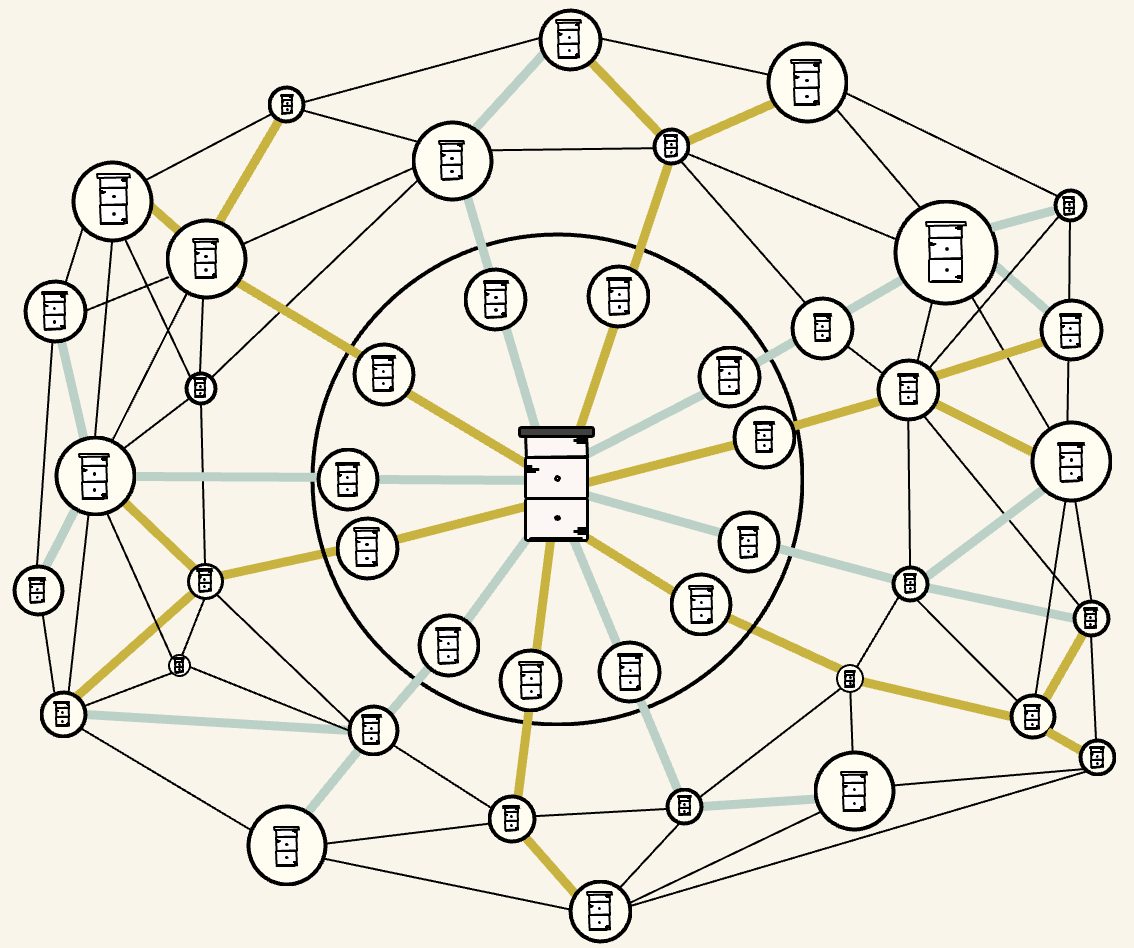
This means honey bee health isn’t just shaped by our individual beekeeping practices. Our bees are also impacted by the beekeeping systems we belong to. A beekeeping system consists of an extended network of honey bees and beekeepers who are connected to—and impact—each other.
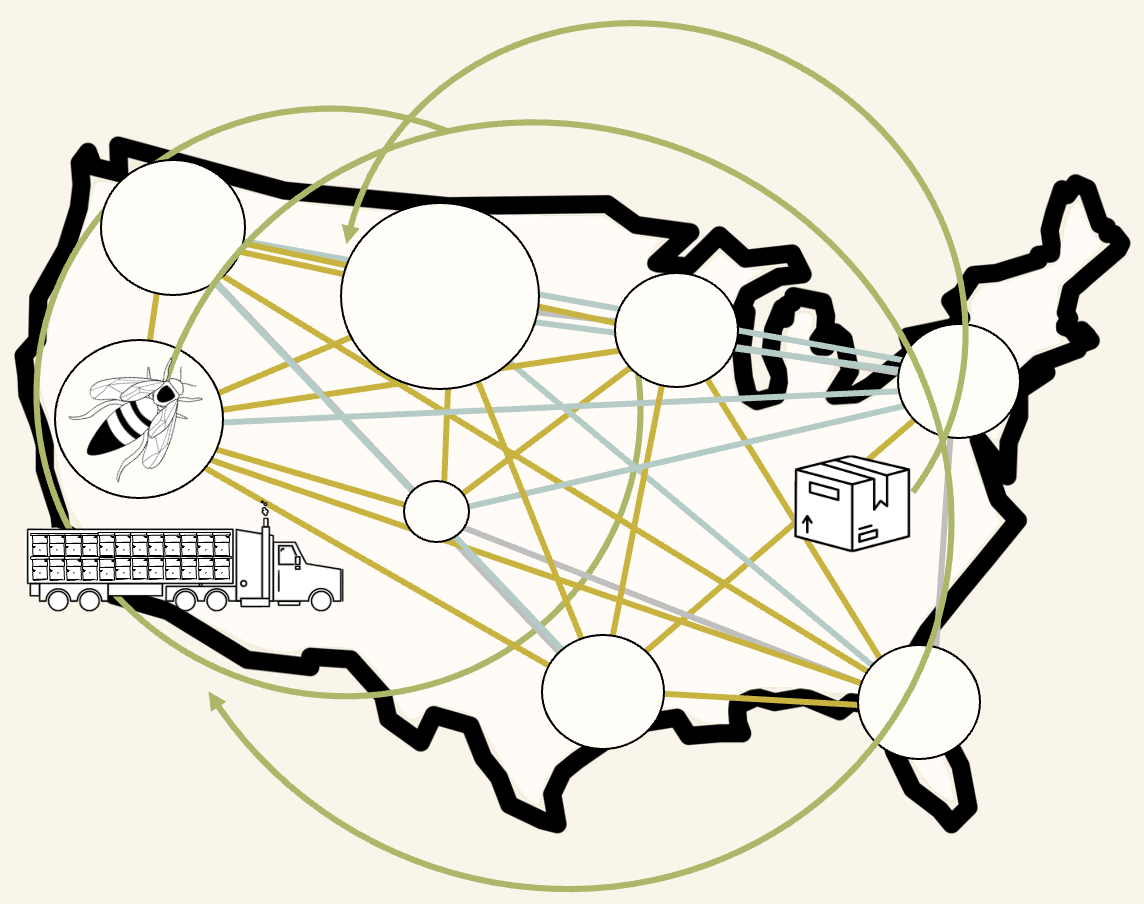
In small-scale systems, colony-colony contact occurs mostly at the local level. But when beekeeping systems industrialize, genes and germs don’t just move from colony to colony; they’re transported from coast to coast, and honey bees catch “cooties” from colonies they’ve never even met.
Beekeepers are primed to think in systems. We know our bees are connected, and we know that many of the stressors they face are rooted in the systems we belong to. The thing is, we often think of these systems as fixed, immovable structures. But beekeeping systems are made up of beekeeping practices, and that means they can change.
Activating
systems change
is within our reach.
Once we wrap our heads around not just the ways our bees are connected, not just the ways this impacts honey bee health, but the ways our everyday actions shape the systems we’re in, THEN we can identify the basic beekeeping practices that both keep our bees healthy in our system as it stands, AND help tip that system towards resilience.
We call this system-savvy beekeeping.
Like all good things in beekeeping, this work starts inside the hive.
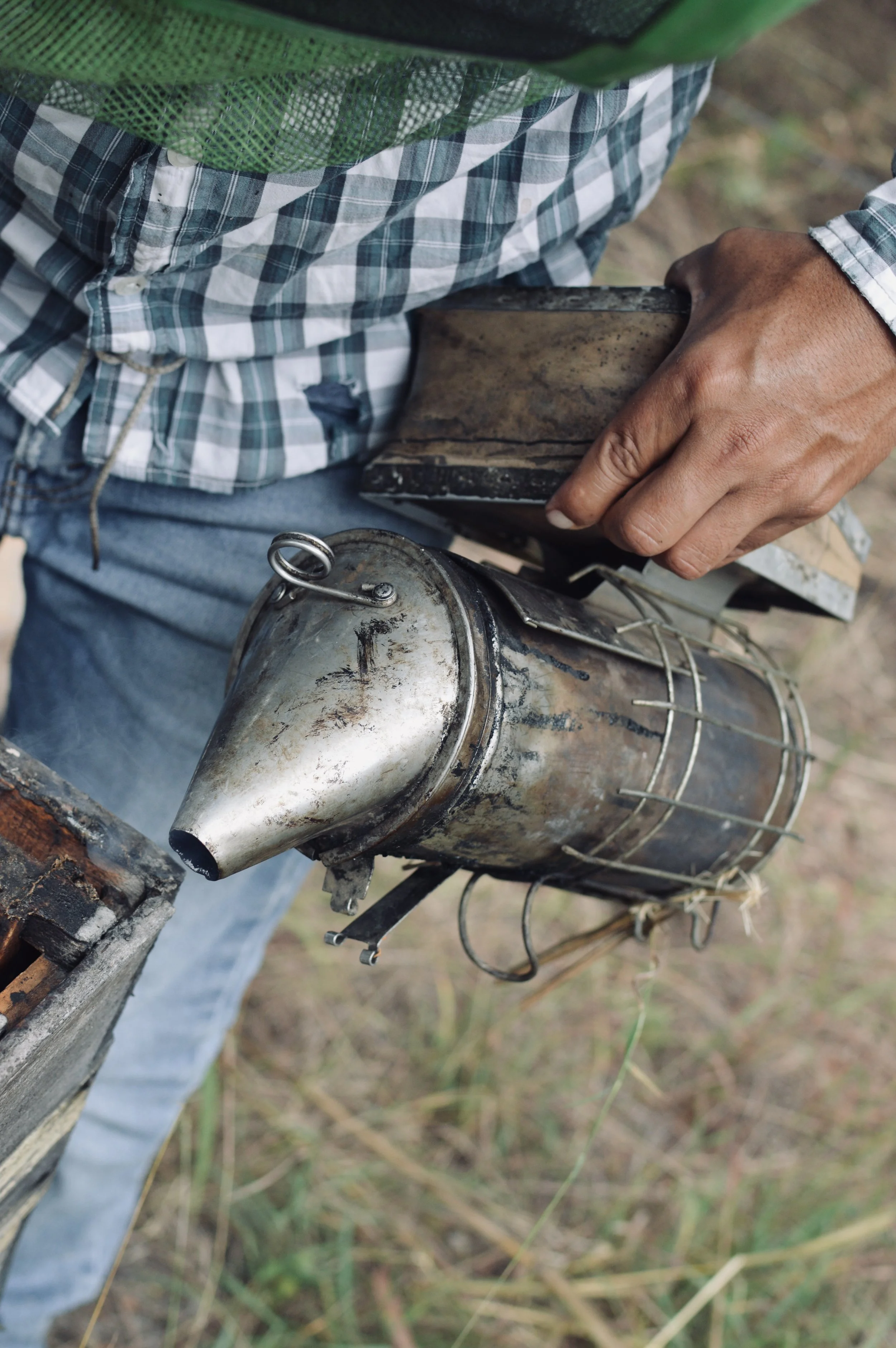
System-savvy beekeeping
Systems thinking tools + sustainable beekeeping practices = system-savvy beekeeping
At WeKeep, we help beekeepers map the systems they’re in and identify beekeeping practices that support cycle-breaking positive change, both for their bees and for their system.
Systems-savvy strategy covers three main areas:
Colony density
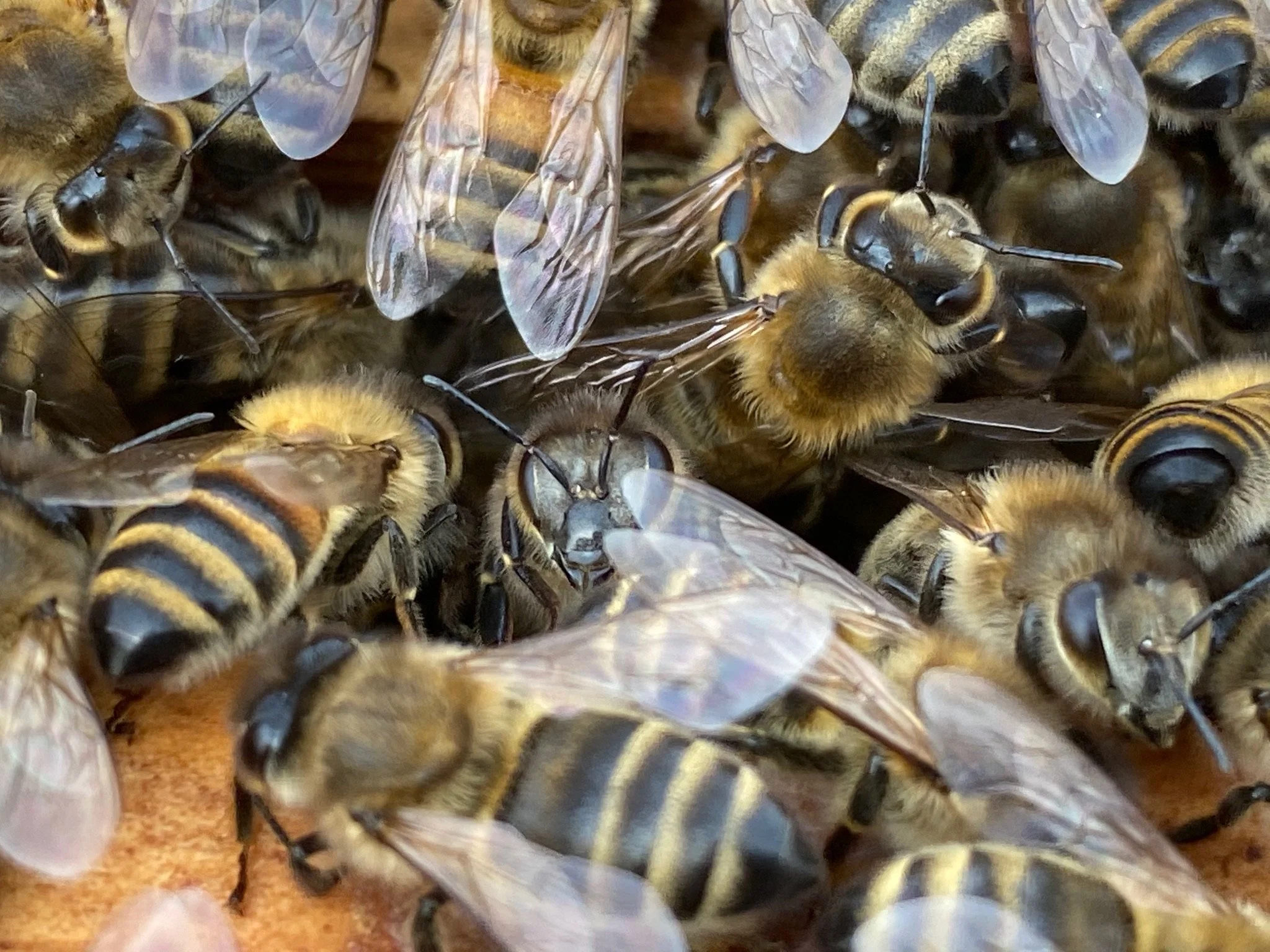
We take a look at the number of colonies sharing a forage radius with our bees, and we work to increase colony spacing and decrease drift. This work can be collective, but it can also start at home. Studies show that even small changes to apiary set-up help to mitigate pathogen transmission and reduce resource strain.
Colony movement
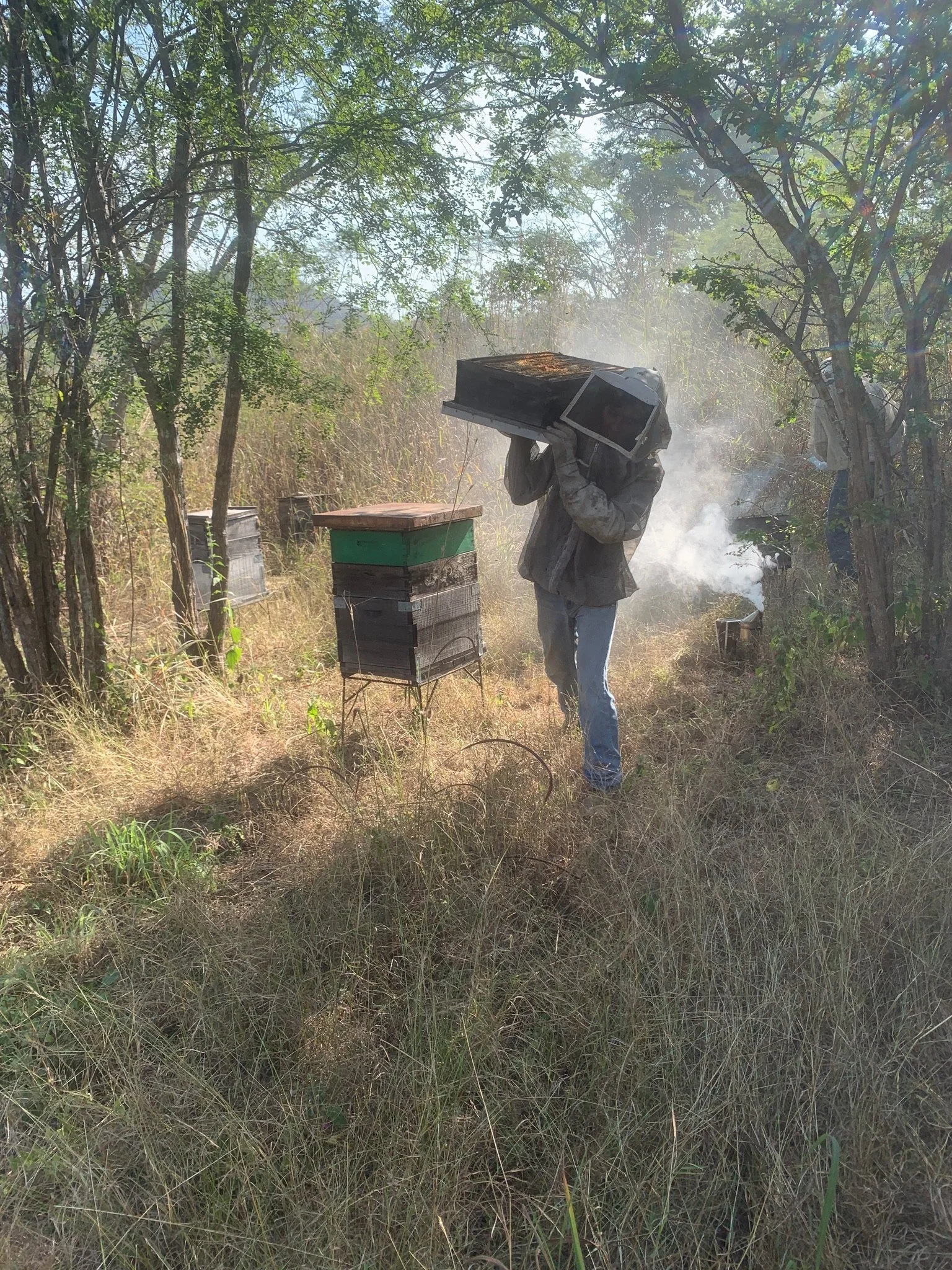
We source our bees locally. Whether we’re catching swarms, making splits, or purchasing from a local producer, we do our best to stick close to home when we source our bees and queens. This not only helps to reduce long-distance pathogen transmission, it sets the stage for local adaptation and can amplify regional efforts to boost mite resistance.
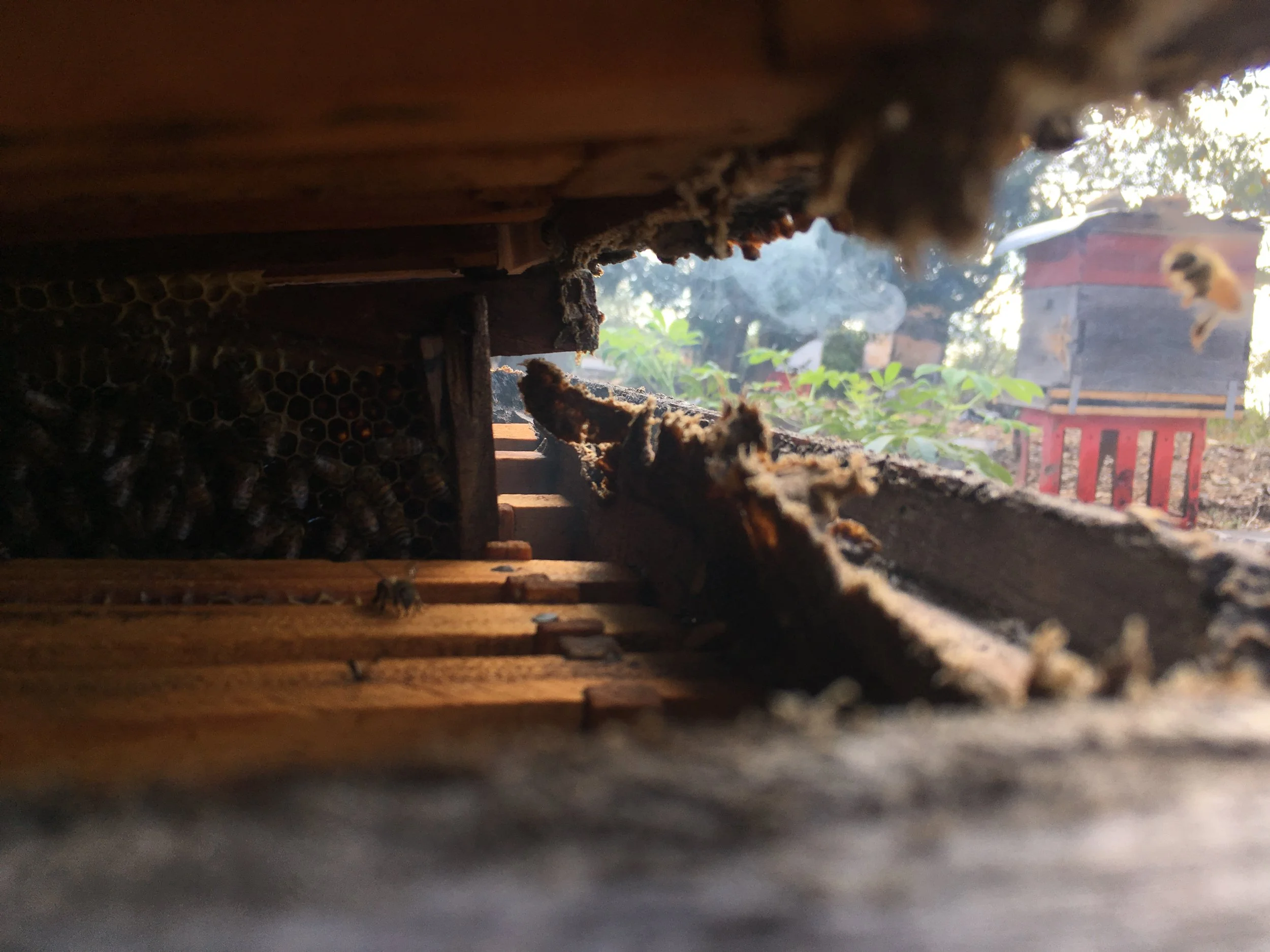
Inputs use
We take steps to decrease our bees’ dependence on external inputs like sugar water, pollen patties, and miticides, not by withdrawing critical care, but by using evidence-based strategies to increase access to forage resources, decrease exposure to stressors, and foster the natural behaviors that help our bees meet their own needs.
Systems-savvy beekeeping isn’t about developing new tools. It’s about using systems thinking skills to connect existing tools to a broader strategy so we can shift the conditions our bees face.
Ready to get started? “This is How We Keep Them,” our signature course on system-savvy beekeeping, starts November 5.

Who’s “we?”
Hi there! We’re Héctor and Maggie. Beekeepers, researchers, and WeKeep co-founders.
Our beekeeping experience spans four continents, but we do most of our work in the U.S. and Mexico. In one system, we see bees struggle. In the other, we watch them thrive.
We’ve studied the factors that set some systems up for survival and steer others towards collapse. Here is what we know.
In the honey bee world we are —quite literally— our neighbors’ keepers. This means that if we want to move the needle on honey bee health, we’re going to have to work to build both resilient beekeeping practices and resilient beekeeping systems.
This might seem like a tall order, but we built the systems we belong to. Together, we can transform them.
We’re part of the “we.” We hope you will be, too.
Our approach
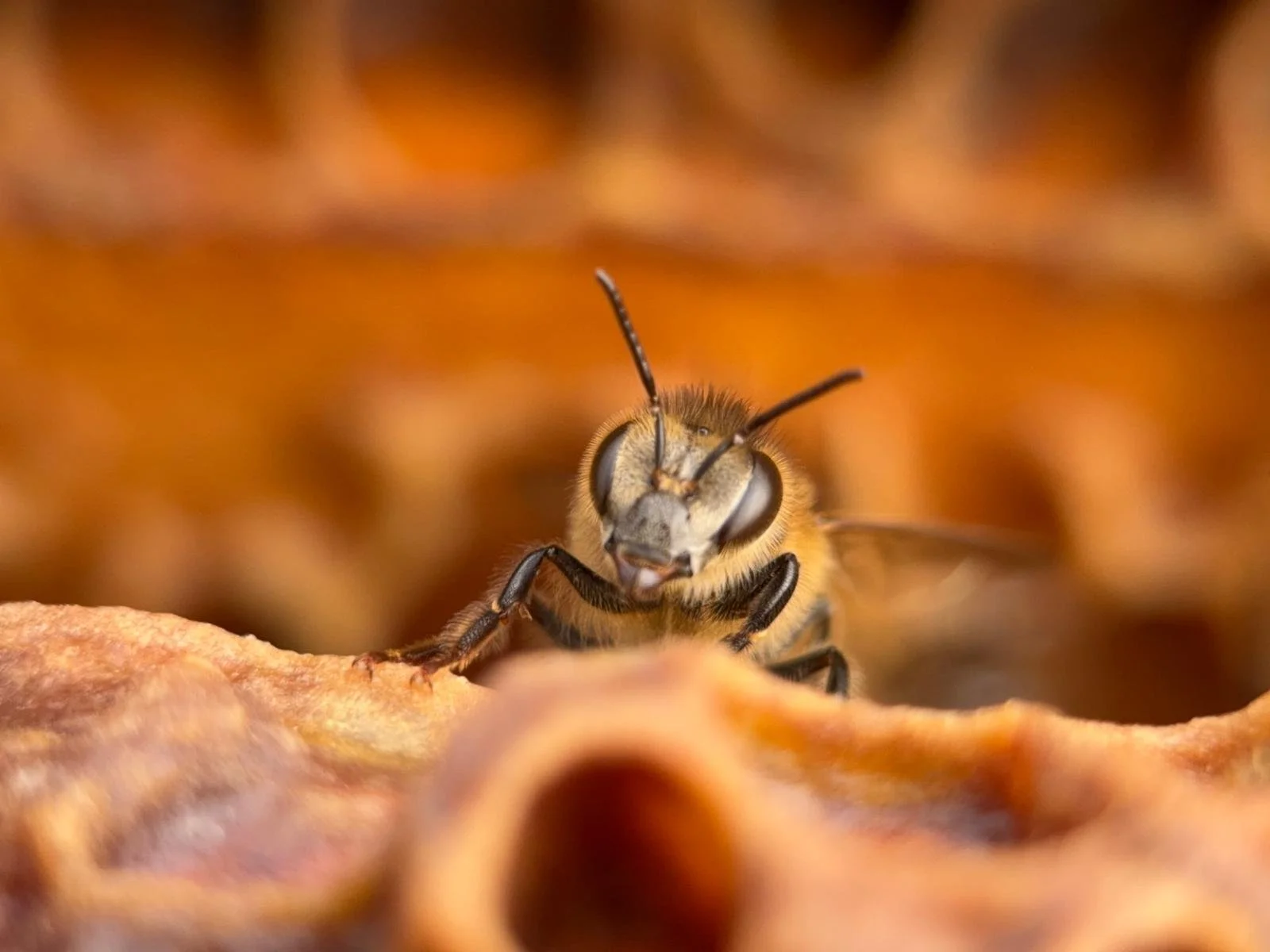
We teach beekeepers system-savvy beekeeping.
Systems-savvy beekeeping is about using systems thinking to set your bees up for survival and contribute to long-term, collective resilience.
If you’re an individual beekeeper, our signature course is where you start.
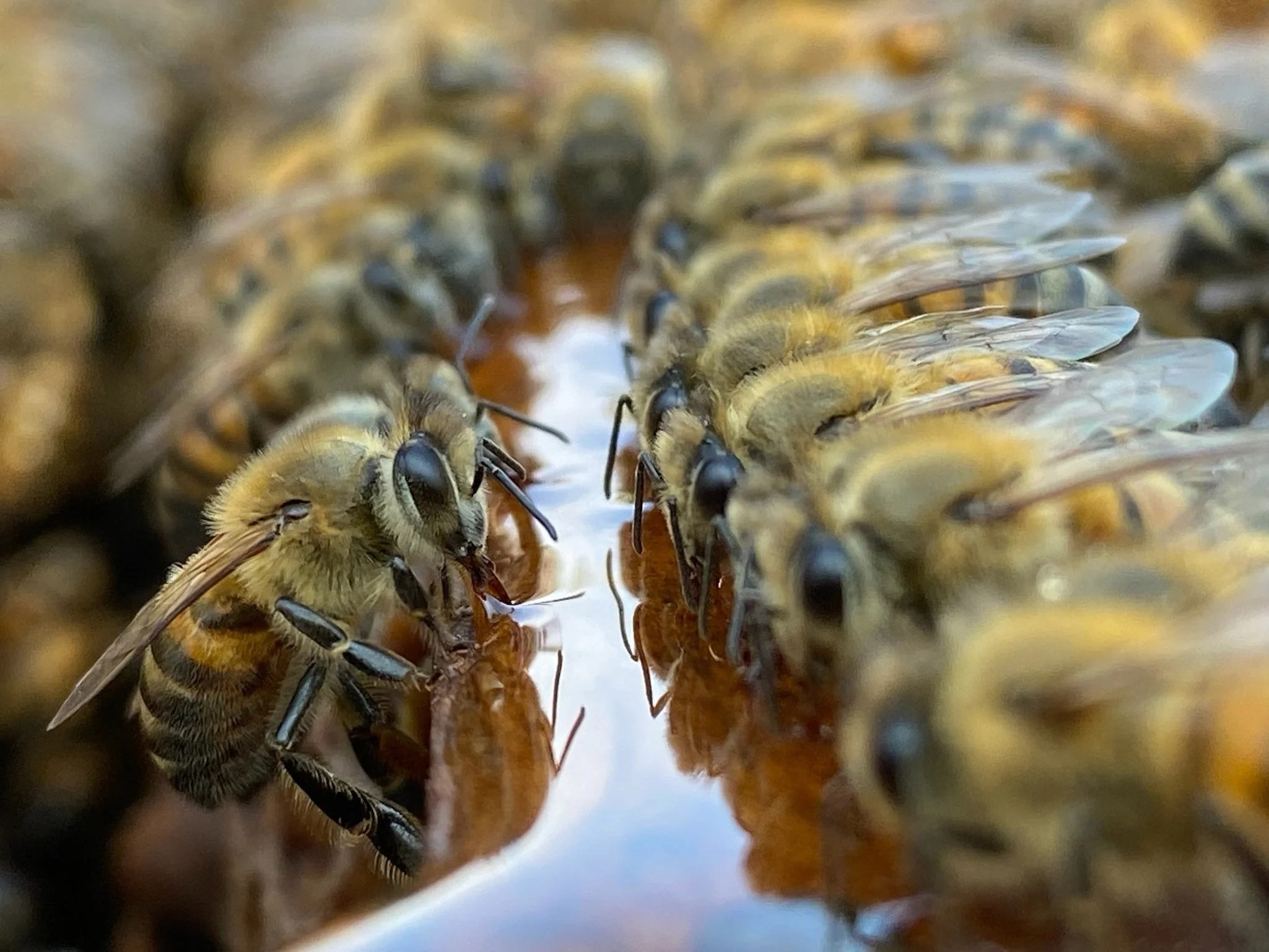
We help beekeeping groups start Sweet Spots.
Sweet Spots are regional hubs where groups of beekeepers work together to create the conditions their bees need to thrive.
If your group is ready to take collective action, this container is for you.
Our services
Learn about the impacts of industrial agriculture on honey bee health, the power of beekeeper knowledge networks, and beekeeper-led strategies to seed systems change.
We help individuals and groups build both resilient beekeeping practices and resilient beekeeping systems. Click the link below to learn more about WeKeep workshops.
Schedule a one-on-one consult or contact us to set up an invited talk with your local beekeeping group.