

Learn system-savvy beekeeping
so you can set your bees up for survival and
help build a broader movement to tip our systems towards resilience
THIS IS HOW WE KEEP THEM is a live, online course for beekeepers who know the status quo isn’t working and want to build a different future for their bees.
November 5, 12, 19 & December 3 | 6:00-7:30pm CST on Zoom*
*click here for group sign-up options
Colony loss can feel like a personal failing.
After all, as beekeepers it’s our job to help our bees stay healthy. But the widespread, large-scale collapse of honey bee colonies in the U.S. and around the world? The fact that it’s this hard to keep your bees alive? That is not a you problem. It’s a systems issue.
It’s not that beekeeping is supposed to be easy. Tending to a superorganism is inherently complex. But the run-of-the-mill beekeeping challenges that could once be addressed with a few technical tweaks? They’ve been complicated exponentially by changes in the systems that surround us. The ecosystems, the agricultural systems, the beekeeping systems.
If you’re a seasoned beekeeper, there’s a good chance you’ve seen first-hand that the systems that surround you aren’t working for your bees.
The good news is: it doesn’t have to be this way.
THIS IS HOW WE KEEP THEM, our signature course for small- and mid-scale beekeepers, helps you connect with resilience-building beekeeping practices, so you can set your bees up for survival in times of increasing collapse.
It helps you locate day-to-day beekeeping decisions within a broader systems context, so that you can make sure the actions you take with your bees in your yard don’t just meet a short-term need, but also help shift conditions in a real and lasting way.
AND it helps you break the urgent work of systems change into manageable steps so that you feel grounded, clear, and connected as you orient towards action.
Join us for this live, four-part virtual course, beginning November 5
We start the course with three teaching modules, each consisting of:
An interactive presentation to get us all on the same page
A concrete action step so that we can get started taking action, together
In-depth discussion, where we connect resilience-building frameworks to your particular context
We close the course with a full-on discussion module, so we can set you up for your next steps.
Here’s what we get into:
-
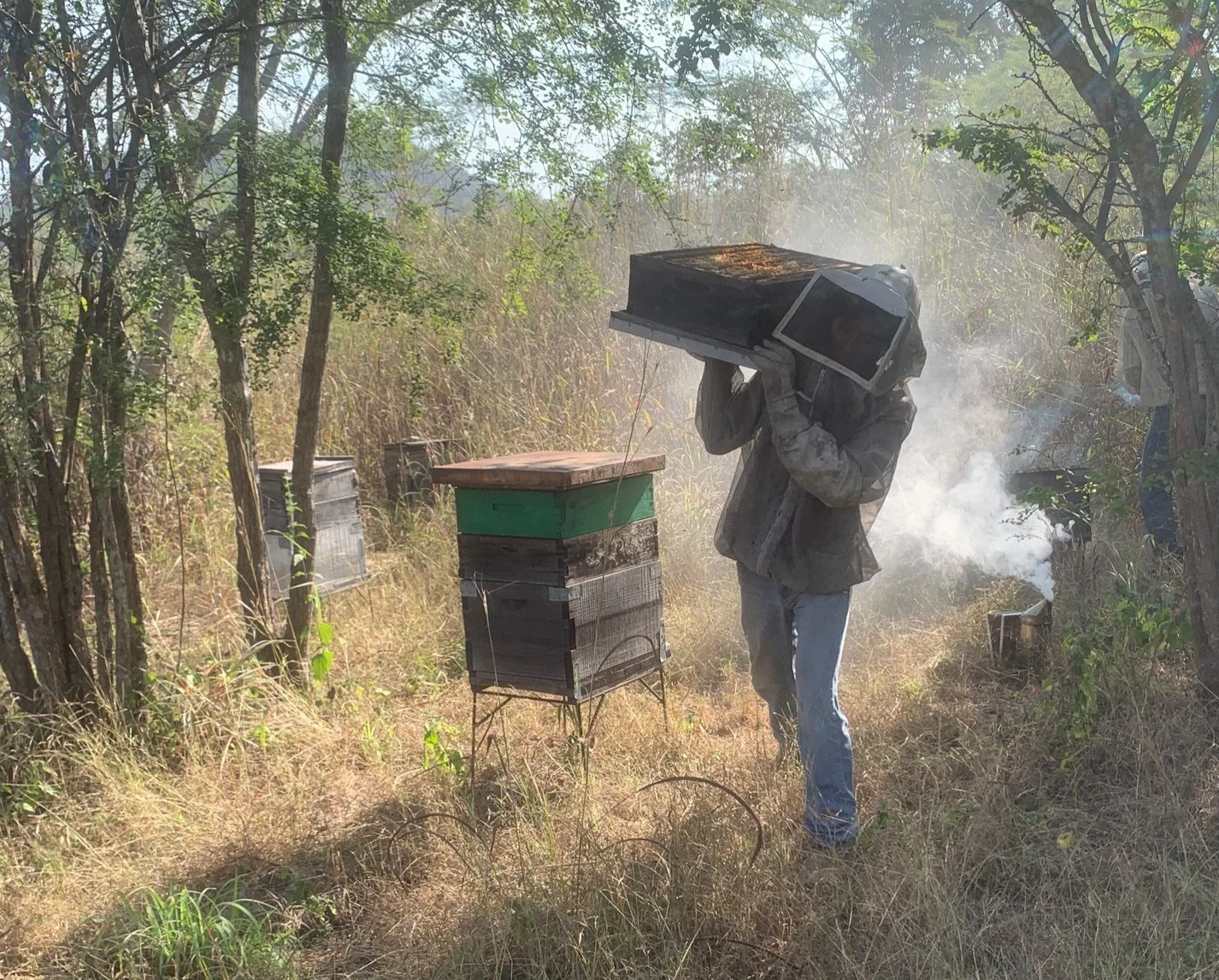
![A beekeeper hauls a full honey super out of the apiary at harvest time.]()
Day 1: Thursday, November 5 | 6-7:30pm CST
THE BEEKEEPING SYSTEMS FRAMEWORK
Hone your systems thinking skills! Learn how beekeeping systems work, and explore the ways that systems thinking can help us set our bees up for survival.Action step: Map your beekeeping system
-
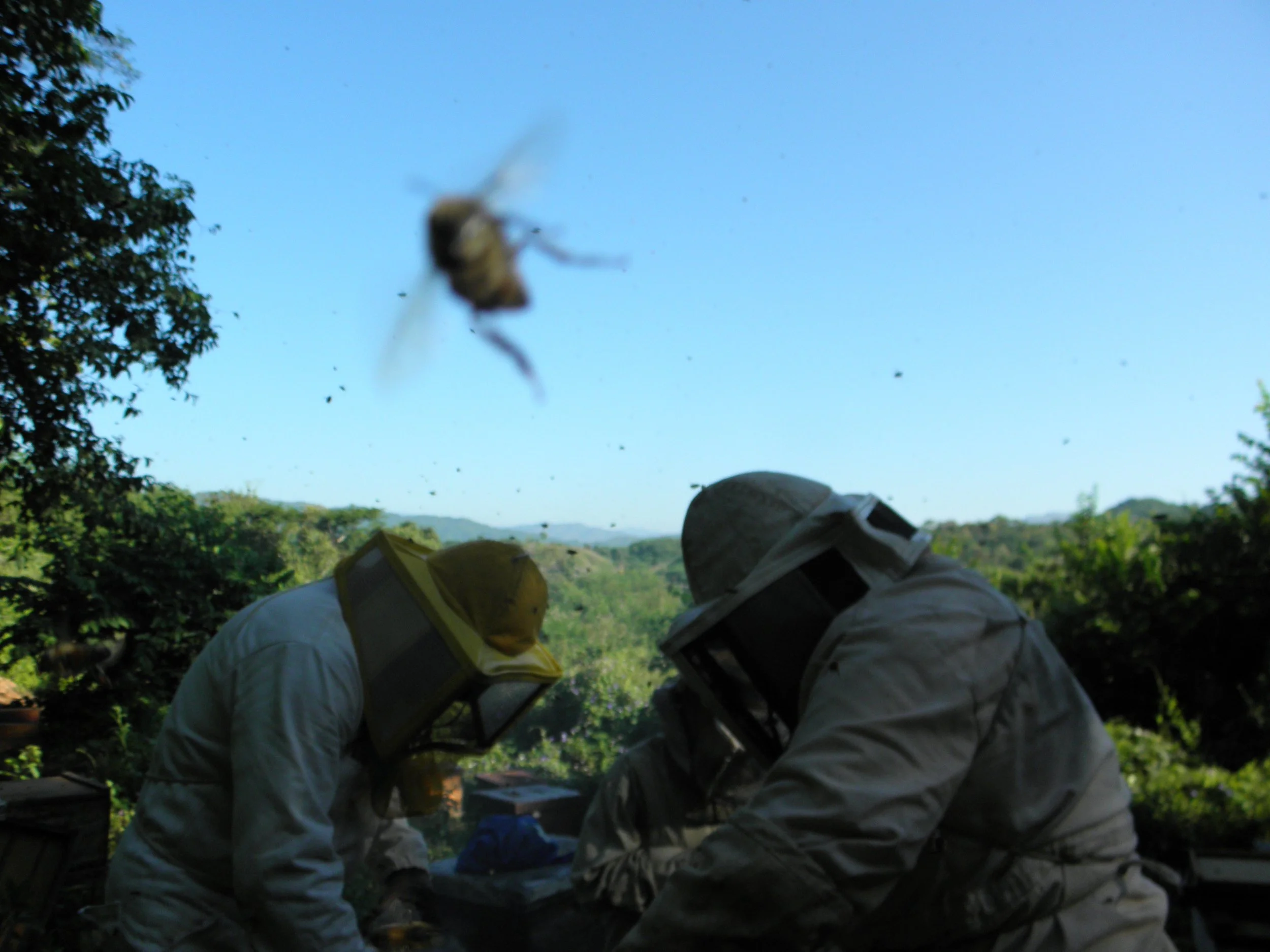
![Two beekeepers work opposite each other on a hive while a honey bee in the foreground careens towards the camera.]()
Day 2: Thursday, November 12 | 6-7:30pm CST
IMPACTS OF INDUSTRIAL BEEKEEPING
Explore the ways industrialization shows up in beekeeping spaces and examine its impacts on honey bee health, ecosystems, and food systems.Action step: Run an inputs use diagnostic
-
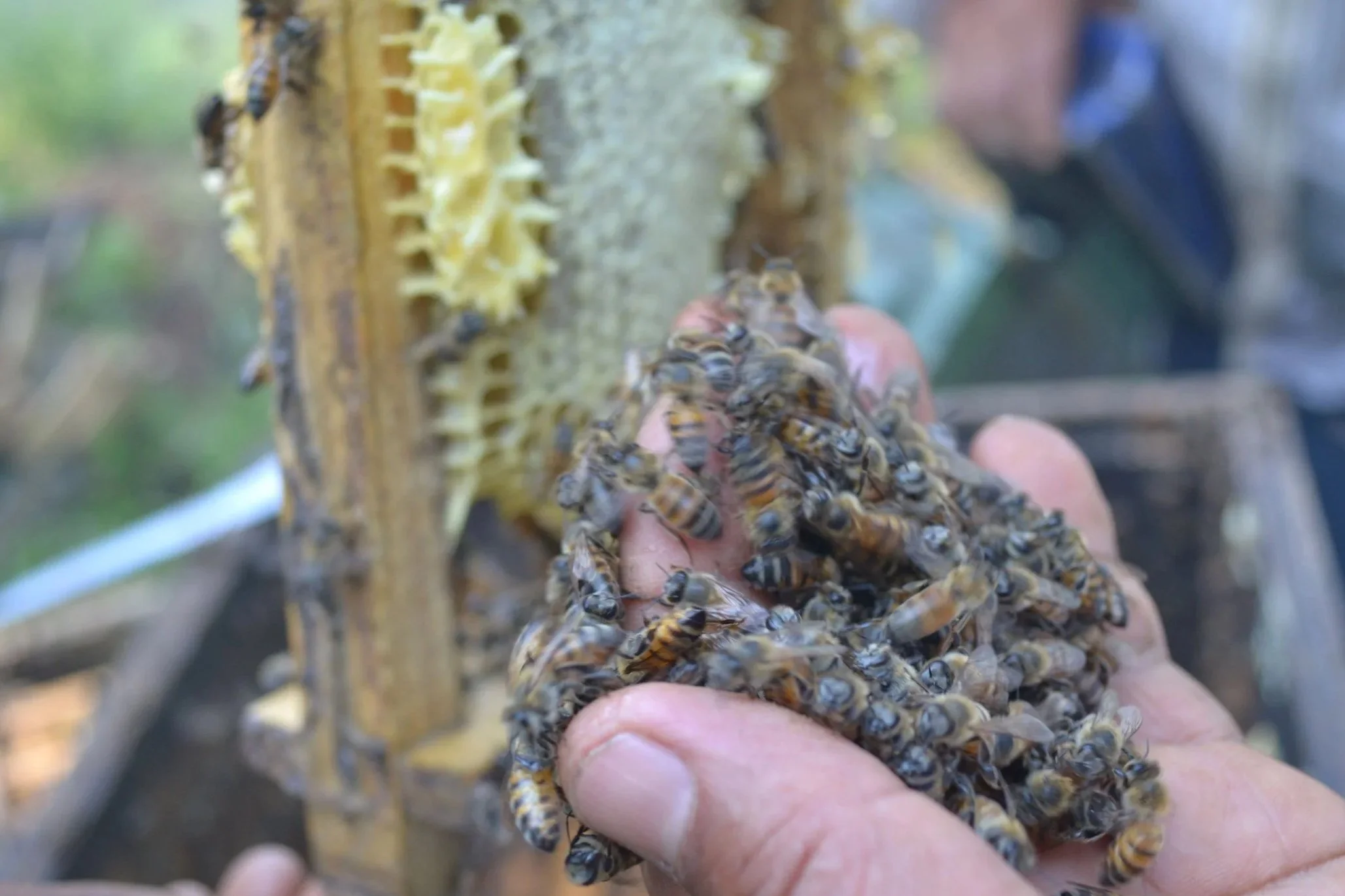
![A beekeeper holds up a handful of live honey bees.]()
Day 3: Thursday, November 19 | 6-7:30pm CST
BUILDING RESILIENT BEEKEEPING SYSTEMS
Learn to identify resilience-building practices. Use the Beekeeping Systems Framework to determine which practices work best for your bees.Action step: Build your own Resilience Library
-
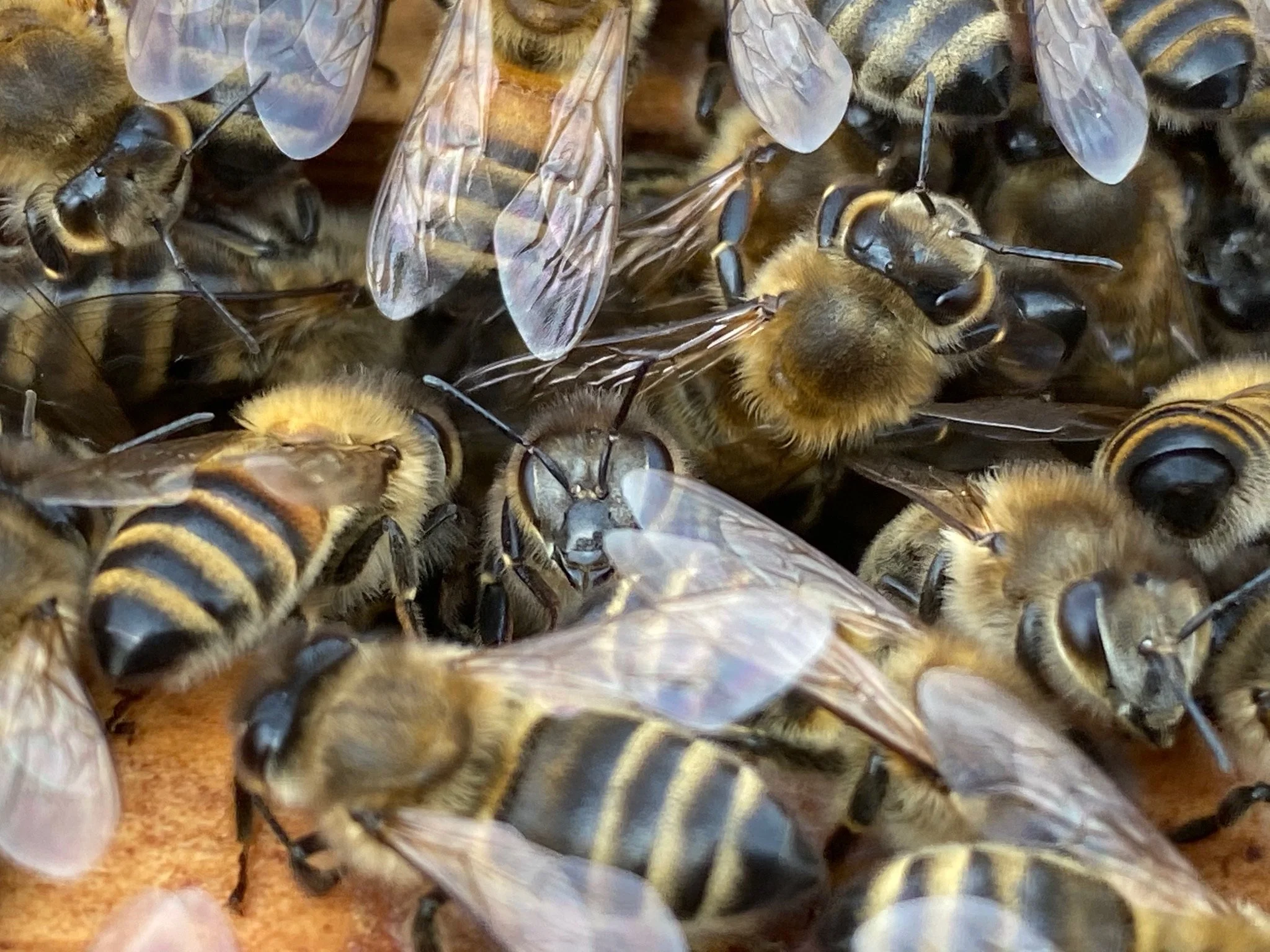
![A close-up photo of honey bees crowding together on top of a frame.]()
Day 4: December 3 | 6-7:30pm CST
TROUBLESHOOTING YOUR ACTION PLAN
Reflect on learnings from modules 1-3. Dig deeper into discussion, and prep for your next steps.
All modules are recorded and shared with lifetime access.
Plus, when you register for THIS IS HOW WE KEEP THEM, you also get:
Access to a customizable, evidence-based Resilience Library so that you can translate your knowledge into action
A 10% discount on one-on-one consults so that we can troubleshoot together as you implement your action plan
Priority access to Sweet Spot services, so your beekeeping group can get the support you need to shift conditions in your local area.
Our one-time beta price is $249.
Two ways to sign up for this course:
-
Sign up as an individual and join a cohort of resilience-building beekeepers from different parts of the country
-
Coordinate with other beekeepers in your area and sign up as a group, so that we can dig into the specifics of your local context.
Minimum 8 people per group.
Submit an inquiry here.
Here’s what people are saying about our work:
“With one foot in the research world and another in the bee yard, Maggie and Héctor draw on scientific expertise and hands-on beekeeping experience to assemble clear, compelling action steps for beekeepers making a bid for resilience in the U.S. and around the world.”
Mark Winston, honey bee researcher and author of Bee Time: Lessons from the Hive“This course really addresses the problem of industrialized beekeeping and centers the resilience of bees in its approach, while providing real and tangible steps towards improving the existing beekeeping systems we operate within.”
Gia Biaocchi, Chief Operating Officer, Apis Arborea“Maggie and Héctor are exactly the voices beekeeping needs right now. Grassroots researchers and activists with a rare gift for translating cutting-edge science into clear, practical strategies that beekeepers can actually use. Their message is both innovative and deeply hopeful, and it holds real promise for healing honeybees.”
Michael Thiele, Founder & Executive Director, Apis Arborea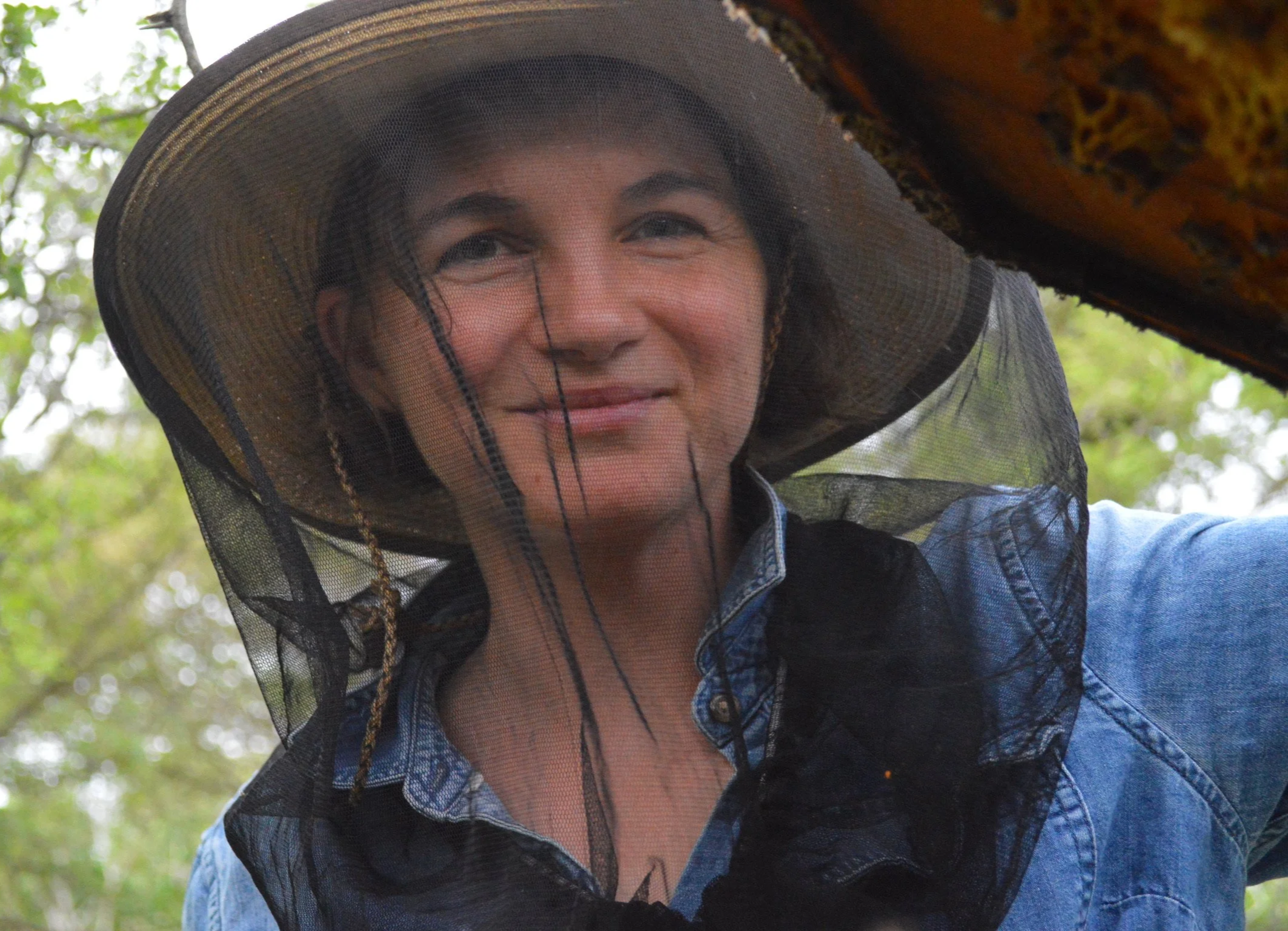
Get to know your teacher
Hi there! I’m Maggie. You might know me as the bee researcher asking the dangerous questions about honey bee health and industrial agriculture.
I take the lead on our English-language courses, and Héctor facilitates our Spanish-language offerings.
I’ve been digging into the way beekeepers can shift the systems we’re in for five years now, and it’s changed my approach to beekeeping completely.
I’m excited to bring you THIS IS HOW WE KEEP THEM so that together we can use systems thinking strategies to move the needle on honey bee health.

Frequently Asked Questions
-
We think it’s a great idea for beginners to ground themselves in systems thinking right from the start of their beekeeping journey. That said, this course is designed for beekeepers with several years’ experience. You’ll need a working knowledge of bee biology and a general familiarity with common beekeeping terms and practices in order to make the most of the concepts we share.
-
It does not! Our priority in this course is to help you to build the skills you need to determine which practices work best for your bees. Our Resilience Library does include some resources around implementation, but our focus here is what to do (more specifically, how to know what to do!), not how to do it. If you’re looking for hands-on help, drop us a line! We’re happy to help direct you towards technical, hands-on beekeeping resources.
-
Sadly, we cannot. Because colony loss is a systems issue, the stressors our bees face are sometimes beyond our control. This means that even the most thoughtful, the most considered, the most airtight management plan can’t guarantee that your bees will survive. Our goal with this course is to help you understand the big-picture factors that impact your bees, and take steps to reduce exposure and increase resilience. We do firmly believe that systems-savvy beekeeping improves outcomes over time. But colony health is a complex thing. There is no silver bullet, and there are likely to be losses along the way.
-
One of our central goals is to build towards a future where honey bees manage pests and pathogens —successfully— on their own (aka without beekeeper intervention; aka treatment-free). In this course, we cover steps beekeepers can take to decrease disease exposure, increase bees’ access to natural, health-supportive behaviors, and reduce dependence on miticides. While treatment-free beekeeping is the ultimate goal (and does support bee health in places like southern Mexico), in high-density, miticide-dependent contexts, going treatment-free is rarely the first —or only— step towards raising mite resistant bees. We encourage beekeepers to pursue collectively-minded strategies to establish widespread mite resistance. In some contexts, this requires strategic use of organic miticides. In others, it does not.
-
The examples we draw from in this course are centered in beekeeping experiences in the U.S. and Mexico, but the frameworks we share are broadly applicable. Industrialization impacts beekeepers in much of the world, and systems thinking supports resilience everywhere. On top of that, gathering with a diverse group gives us all more opportunity to learn from each other.
If you are joining us from outside the U.S., be sure to indicate this on your intake form so we can prepare course materials accordingly.
All that said, we are in the process of preparing a Spanish-language course geared primarily towards folks working with European-scutellata hybrid bees (also called ”Africanized bees”) in Mexico and Latin America. If you feel this course would be a better fit for you, make sure to sign up for our email list, and keep an eye out for this offering.
-
Great to hear you’re interested! Two options here. You can sign up for our email list, and we’ll let you know when our next set of dates rolls around. Or, you can coordinate with beekeepers in your area and sign up as group.
Beekeepers signing up in groups of 8 or more can propose their own set of dates.
-
Our first three modules are teaching modules. These consist of 30 minutes of teaching time, an action step we work through together, and time for Q&A and discussion.
Our final module is discussion-based. In this module, we’ll troubleshoot the action steps you’ve decided to pursue and make sure you’re set up to put resilience into practice.
-
Not a problem! You can always catch up with the recording. Session recordings and accompanying action steps will be available on our class Notion page shortly after each session concludes.
Ready to sign up for THIS IS HOW WE KEEP THEM?
If you’ve made it all the way down here, this is what we want you to know:
The challenges we’re up against can often seem daunting, but you are not in this alone. When we pull together, when we take honest stock of the systems we’re in and organize our actions accordingly, we can make real, measurable change for our bees and for each other.